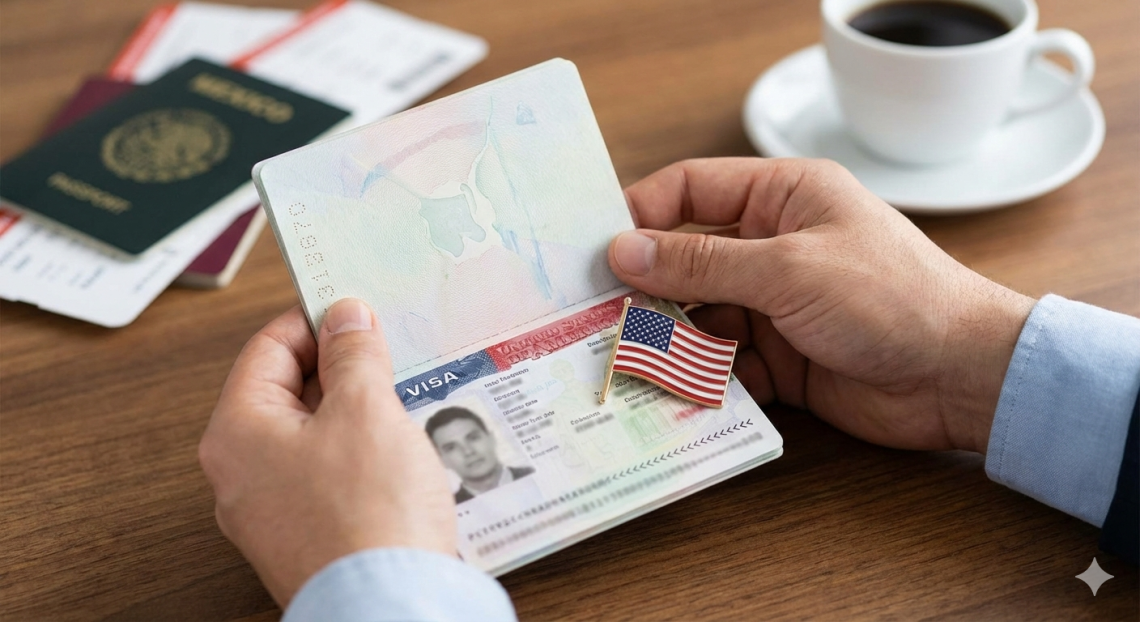
For many Mexican citizens, applying for a U.S. visa is more than just paperwork. It can be the first step toward visiting family, studying abroad, starting a new job, attending a business meeting, or simply traveling and exploring the United States.
But the U.S. immigration system can feel overwhelming at first. There are many visa categories, strict documentation rules, and a process that requires attention to detail. A small mistake—like submitting the wrong form or missing a required document—can slow everything down.
This guide breaks down the most common U.S. visa options for Mexican nationals, explains how to choose the right one, and highlights why certified translations are often a key part of a successful application.
Types of U.S. Visas Available to Mexican Citizens
The United States offers a large number of visa categories (well over 100). Even though the list is long, most visas fall into two main groups:
- Nonimmigrant visas (temporary stays)
- Immigrant visas (permanent residence / green card path)
Let’s look at the most common visa types in each group.
Nonimmigrant Visas (Temporary U.S. Travel)
Nonimmigrant visas are issued when you plan to enter the U.S. for a limited time and for a specific reason, such as tourism, business, school, temporary work, or a short-term program.
Common U.S. nonimmigrant visas for Mexican citizens
Visitor Visas (B1/B2)
These are some of the most frequently used visas.
- B1 is mainly for business-related travel (meetings, conferences, negotiations).
- B2 is for tourism, visiting family, or medical-related travel.
Student Visas (F and M visas)
If your goal is to study in the U.S., you’ll typically need:
- F visa for academic programs (universities, colleges, English programs)
- M visa for vocational or technical programs
Exchange Visitor Visas (J and Q visas)
These visas are designed for approved exchange programs, including:
- students
- researchers
- professors
- trainees
- cultural exchange participants
Temporary Work Visas (H visas)
If you have a job offer from a U.S. employer, you may qualify for an H visa, such as:
- H-1B for specialty occupations
- H-2A for agricultural work
- H-2B for seasonal or non-agricultural work
Investor and Trader Visas (E visas)
If you plan to invest a significant amount into a U.S. business, you may need an E visa, including:
- E-1 for treaty traders
- E-2 for treaty investors
Intra-company Transfer Visas (L visas)
If you work for a multinational company and are transferred to a U.S. branch, you may qualify for an L visa.
Fiancé(e) Visas (K visas)
If you are engaged to a U.S. citizen and intend to marry in the United States, a K visa is usually required.
Athlete / Artist / Entertainment Visas (P visas)
For professionals traveling to the U.S. to compete or perform at events.
Diplomatic and Official Visas (A and G visas)
For diplomats, government officials, or employees of international organizations traveling for official duties.
Border Crossing Card (BCC)
Mexican citizens may also apply for a Border Crossing Card (BCC), which is designed for short visits to the U.S. for tourism or business. It works as an identity and travel document and is commonly used for land crossings, but may also be valid for entry by air or sea depending on the circumstances.
In many cases, the BCC is issued with a long validity period (often up to 10 years), but the permitted travel rules depend on your entry method and travel location.
Immigrant Visas (Permanent U.S. Residence)
Immigrant visas are for Mexican citizens who plan to live in the U.S. permanently. These visas are connected to lawful permanent residence (a green card), and many are based on family or employment sponsorship.
Common U.S. immigrant visa categories
Family-Based Immigrant Visas (Family categories)
If you have a close relative who is a U.S. citizen or lawful permanent resident, you may qualify through family sponsorship. Some categories move faster than others depending on the relationship.
Employment-Based Immigrant Visas (EB visas)
These are based on professional background, skills, or job sponsorship. Common groups include:
- EB-1 priority workers
- EB-2 advanced degree professionals or exceptional ability
- EB-3 skilled workers and professionals
- EB-4 special immigrants
- EB-5 immigrant investors
Diversity Visa (DV Lottery)
This program offers green cards through random selection to applicants from eligible countries with historically low immigration rates. It is only open during a limited period each year.
Special Immigrant Visas (SIVs)
Certain SIV categories apply to individuals who supported U.S. missions abroad in specific roles.
Returning Resident Visa (SB-1)
If you were a lawful permanent resident and stayed outside the U.S. for too long, you may need an SB-1 visa to return as a resident (if you meet eligibility requirements).
Where U.S. Visa Applications Are Processed in Mexico
Immigrant visa processing is generally handled through the U.S. Consulate General in Ciudad Juarez, which manages many immigrant visa interviews and approvals.
Many nonimmigrant visa applications—including K-1 fiancé(e) visas—are typically processed through the U.S. Embassy in Mexico City, depending on the visa category and instructions.
Always follow the official scheduling instructions, including required appointments at an Applicant Service Center (ASC) for biometrics before the consular interview.
How to Choose the Right U.S. Visa
With so many visa types, the best approach is to simplify the decision into a few key questions.
1) Identify the main reason for your trip
Ask yourself:
- Is this travel for tourism, business, study, work, or immigration?
- Is your stay short-term or long-term?
- Are you returning to Mexico after the trip, or relocating permanently?
Once your purpose is clear, it becomes easier to narrow down the correct category.
2) Confirm eligibility rules
Every visa has its own requirements. Eligibility often depends on things like:
- your employment status
- your family relationships in the U.S.
- the documents you can provide
- your ability to show strong ties to Mexico (for temporary travel)
3) Use official tools to confirm your visa type
The U.S. Department of State provides resources that explain each visa category in detail, and it also offers a Visa Wizard tool that helps applicants identify the correct visa option based on their travel purpose.
4) Understand your legal responsibilities
Before applying, make sure you understand what your visa allows you to do and what it does not allow, including:
- whether employment is permitted
- whether you can extend your stay
- whether you can change your status inside the U.S.
- what actions could cause you to violate visa rules
A visa is not just permission to enter—it comes with conditions you must follow.
General U.S. Visa Application Requirements for Mexican Citizens
The documents you need depend on your visa type, but many applicants are required to provide a combination of:
- confirmation page from the Consular Electronic Application Center (CEAC)
- completed application form (such as DS-160 for nonimmigrant visas)
- a valid passport
- visa fee payment receipt
- passport-style photos
- appointment confirmation details
- social media information (when requested)
- previous U.S. visa history (if applicable)
- travel itinerary or trip details
- invitation letter (if relevant)
- sponsor or financial support documents (if relevant)
Depending on your visa category, you may also need:
For work visas
- job offer letter
- CV/resume
- proof of degrees or qualifications
- letters from previous employers
For study visas
- SEVIS fee receipt
- relevant school documentation
For immigrant visas
- civil documents such as birth certificates, marriage certificates, and police certificates
- court records (if applicable)
- medical examination documents
- Form I-797 (for petition-based cases)
For temporary visas
- evidence of strong ties to Mexico and intent to return (property ownership, job proof, family ties, etc.)
Mexican Supporting Documents: What Usually Gets Accepted
When applying for an immigrant visa, civil documents must typically be issued by the appropriate Mexican government authority in the required format.
Religious documents—such as baptismal certificates—are usually not accepted as official government civil records for U.S. immigration purposes.
Official documents issued through recognized authorities (such as the Mexican Ministry of Foreign Affairs, depending on the document type) are commonly used, and certified copies are often available through the Civil Registry Office.
U.S. Visa Application Fees (Common Examples)
Visa fees depend on the visa category, but many applicants should expect costs such as:
- Standard nonimmigrant visa fee (MRV / DS-160): often around $185 for many categories
- Petition-based visa fees (H, L, O, P, Q, R): commonly around $205, though some petitions may have additional costs
- E category treaty investor/trader fee: commonly around $315
- K visa (fiancé(e) / spouse of U.S. citizen): often around $265
- Biometric services fee: typically $85 in many cases
These fees are usually non-refundable, even if your visa is denied or you cancel your appointment. Keep all receipts and confirmations, because you may need them during scheduling and interview steps.
What Happens After Visa Approval (Delivery and Entry)
For many cases, applicants must select a courier delivery option (such as DHL) to receive the visa after approval.
It’s important to understand that approval at the interview does not always mean immediate delivery. Your passport and visa packet may be returned after processing, and only then can you travel and enter the U.S. through a Port of Entry.
Certain medical annotations may require special instructions for entry, depending on your situation.
U.S. Visa Processing Times (What to Expect)
Processing time varies widely depending on visa type, season, and consulate workload. Some visas may be processed quickly after the interview, while others can take weeks or months.
In general:
- visitor visas can take several weeks
- student visas may be issued shortly after the interview
- work visas often take months
- K-1 fiancé(e) visas can take multiple months
- U visas and similar humanitarian categories may take a year or more
Always plan ahead and avoid booking non-refundable travel until you are confident about timing.
Why Certified Translations Matter for U.S. Visa Applications
Because the U.S. immigration system operates primarily in English, many Spanish documents submitted from Mexico may need to be translated into English.
Certified translations can be important because they:
- reduce misunderstandings during review
- help meet legal and USCIS documentation standards
- prevent delays caused by incomplete paperwork
- protect your case by ensuring details are clear and accurate
Even if your documents seem simple, incorrect translations can create inconsistencies that raise questions during processing.
Documents That Often Need Certified Translation (Spanish → English)
Many applicants need certified translations for documents such as:
Identity and civil records
- birth certificates
- marriage or divorce certificates
- national IDs
- driver’s licenses
Education records
- diplomas
- transcripts
- certificates
Employment documents
- contracts
- recommendation letters
- professional licenses
- resumes
Legal documents
- court judgments
- affidavits
- power of attorney papers
Financial records
- bank statements
- tax records
- business documents
Medical documents
- vaccination records
- medical reports
- prescriptions
Immigration-related forms and letters
- supporting evidence
- official letters submitted with your case
How to Choose a Certified Translation Service
Not all translation providers meet immigration requirements, so it’s smart to choose carefully.
A reliable service should offer:
- translators fluent in both Spanish and English
- experience with immigration and legal documents
- clear certification methods accepted for U.S. applications
- fast turnaround options when needed
- transparent pricing
- strong confidentiality practices
- responsive support if you need edits or extra copies
Before committing, it helps to request a sample or review their certification format to ensure it matches U.S. immigration expectations.
Recent Mexico–U.S. Immigration Updates (Quick Notes)
Immigration rules and policies can shift quickly, so staying informed is important.
Recent developments have included:
- legal decisions affecting border enforcement policies
- updates to USCIS filing fees (including increases beginning in 2024)
- high usage of the CBP One app for entry-related requests
Because these changes can affect timelines and requirements, it’s best to check official sources close to your application date.
Final Thoughts
Applying for a U.S. visa as a Mexican citizen can feel complex, but the process becomes much easier when you break it down into clear steps: choose the right visa type, prepare your documents carefully, follow official instructions, and ensure your paperwork is accurate and complete.
For many applicants, certified Spanish-to-English translations are one of the most important pieces—especially for civil documents, legal records, and immigration evidence. Getting them done correctly can help you avoid delays and move through the process with more confidence.

