If you’ve never worked with a translation agency before, it’s easy to assume their job is simple: you send a document in one language, they send it back in another.
In reality, professional translation is a structured service that blends language expertise, subject-matter knowledge, quality control, and project management. A good agency doesn’t just translate text—they help make sure your message works in a new language, culture, and real-world context.
Let’s break down what happens behind the scenes.
They Analyze Your Project Before Anything Is Translated
A serious translation agency doesn’t start by running your file through Google Translate.
First, they look at:
- What type of content you have (legal, marketing, medical, website, personal documents)
- Who the audience is
- Whether certification is required
- How the translation will be used
For example, translating a birth certificate for immigration is completely different from translating product descriptions for an e-commerce store. One requires formal wording and certification. The other needs persuasive language and cultural adaptation.
This initial analysis determines which translators are assigned, how many review stages are needed, and how long the project will take.
Matching Your Content With the Right Translator
Professional agencies don’t use random linguists.
They match each project with translators who specialize in that field. A legal contract goes to someone experienced in legal terminology. Medical records go to a medical translator. Marketing copy goes to someone who understands branding and tone.
Here’s a concrete example:
If you’re translating a lease agreement, the agency won’t assign a general translator. They’ll use someone familiar with legal phrasing so terms like “liability,” “termination,” and “governing law” are handled correctly.
This specialization is one of the biggest differences between professional agencies and low-cost platforms.
They Don’t Just Translate — They Localize
Translation is about language. Localization is about meaning.
Agencies adapt content so it feels natural to the target audience. That includes:
- Adjusting idioms and expressions
- Converting dates, measurements, and currencies
- Adapting tone to cultural expectations
For example, a U.S. marketing slogan might sound overly aggressive in some European markets. A good agency softens the phrasing without changing the intent.
This is especially important for websites, ads, and business communication.
Certified Translation When It’s Required
Some documents must be officially certified.
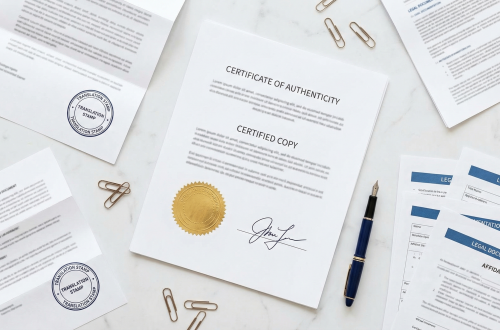
These typically include immigration papers, court documents, academic transcripts, and government forms submitted to organizations like USCIS.
In these cases, the agency provides:
- A complete human translation
- A signed certificate of accuracy
- Often a stamped or notarized copy
You can’t replace this with DIY translation or AI tools. Certified translations follow strict standards, and agencies know exactly how to format them so they’re accepted by institutions.
They Run Multi-Step Quality Control
A professional translation almost never passes through just one person.
Most agencies follow a workflow like this:
Translator → Editor → Proofreader → Final QA
Each step catches different types of issues: grammar, terminology, formatting, consistency, and context.
For example, one person may translate a financial report, another reviews the numbers and terminology, and a third checks layout and formatting before delivery.
This layered approach dramatically reduces errors—especially on large or sensitive projects.
Formatting and File Handling Are Part of the Job
Translation agencies don’t just deliver text in plain documents.
They work with PDFs, Word files, spreadsheets, presentations, websites, and design files. They preserve layouts, tables, headings, and sometimes even graphics.
If you send a passport scan or a complex contract PDF, they return a translated version that visually mirrors the original. That matters when documents are being submitted to official institutions.
They Manage Deadlines, Revisions, and Communication
Another overlooked role of a translation agency is project coordination.
They handle:
- Scheduling translators
- Managing deadlines
- Collecting feedback
- Applying revisions
- Keeping everything organized
Instead of you juggling freelancers, edits, and timelines, the agency becomes your single point of contact.
If you request changes, they route them back to the right linguist. If you need urgent delivery, they adjust resources. This operational layer is what makes translation scalable for businesses.
Protecting Your Data and Confidentiality
Most agencies deal with sensitive information: IDs, contracts, medical records, business plans.
Professional providers use secure file systems and confidentiality agreements. Translators often sign NDAs, and access to your files is limited to people directly involved in the project.
This is especially important for legal and corporate clients.
Real-Life Examples of What Agencies Handle
To make it concrete, here are a few common scenarios:
- A startup translating its website into Spanish and German before launching in Europe
- A student submitting certified transcript translations for university applications
- A company localizing product manuals for international customers
- An immigrant translating birth certificates and marriage records
- An online store adapting product descriptions for different markets
Each of these requires different skills, workflows, and quality standards—yet all fall under the umbrella of professional translation services.
So… What Are You Really Paying For?
You’re not just paying for words.
You’re paying for:
- Subject-matter expertise
- Quality control
- Cultural accuracy
- Certification (when needed)
- Project management
- Data protection
A good translation agency makes your content usable, credible, and compliant—whether that’s for business growth, legal submission, or personal needs.
Final Thoughts
A translation agency is part linguist, part consultant, part quality manager.
They don’t simply convert text from Language A to Language B. They make sure your message survives the journey intact—accurate, natural, and appropriate for its new audience.
If your content matters, who translates it matters too.