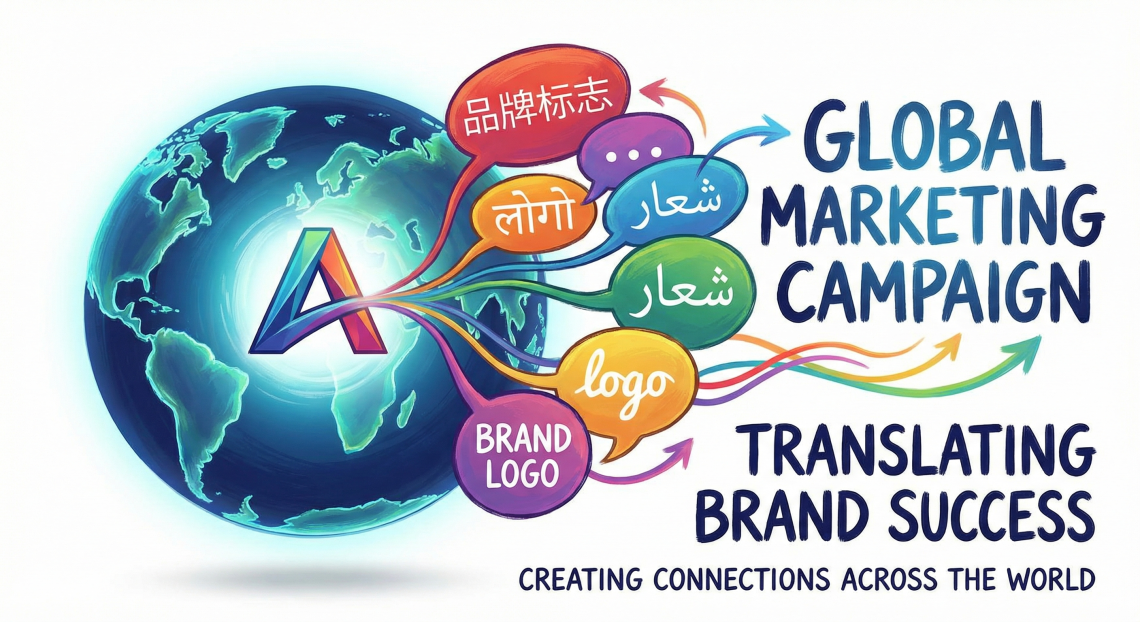
A great brand message can take years to build. It captures your voice, your values, and the exact feeling you want customers to associate with your company. Translating that message into another language is one of the hardest tasks in global marketing. Word-for-word translation rarely works. Idioms fall flat. Humor misfires. Cultural references confuse instead of connect. Marketing translation services exist to solve this problem. They combine linguistic precision with cultural intelligence so your brand lands with the same impact in every market you enter.
Why Marketing Translation Is Different From Standard Translation
Most translation work focuses on accuracy. Legal documents, technical manuals, and medical records must say exactly what the original says. Marketing works differently. The goal is not to reproduce every word. The goal is to reproduce the effect. A tagline that rhymes in English may need a completely new construction in French. A campaign that uses baseball metaphors will not resonate in a market where baseball is unknown.
Transcreation vs Translation
The term for this creative adaptation is transcreation. Transcreation gives translators the freedom to rewrite copy so it achieves the same emotional response in the target language. It is used for taglines, ad headlines, product names, and campaign concepts. Standard translation stays close to the source text. Transcreation starts with the intended feeling and builds a new message around it.
Localization Goes Even Further
Localization adapts not just the words but the entire experience. It covers date formats, currency symbols, color associations, imagery choices, and legal disclaimers. A localized marketing campaign feels native to the market. It does not feel imported. Brands that invest in localization consistently outperform those that rely on direct translation alone.
Core Types of Marketing Content That Require Translation
Marketing translation covers a wide range of content types. Each requires a different level of creative adaptation and a different workflow to manage quality.
Digital Advertising and Social Media
Paid ads and social media posts are short, punchy, and highly dependent on tone. Character limits on platforms like Twitter/X and Google Ads make every word count twice. Translators working on ad copy need copywriting skills alongside fluency. A translated headline that runs three words over a character limit is unusable without further editing.
Website and Landing Page Copy
Your website is often the first point of contact for international customers. Landing page copy needs to convert, not just inform. Translated pages should match the persuasive structure of the original while adjusting cultural cues. Calls to action, testimonials, and benefit statements all need careful handling in each target language.
Email Campaigns and Newsletters
Email marketing relies heavily on subject line performance. A subject line that drives 40% open rates in English may perform poorly in German if the translated version sounds stiff or unfamiliar. Marketing translation teams often write multiple subject line variants per language and test them before sending.
Video Scripts and Voiceover
Video translation adds timing constraints on top of linguistic ones. Dubbed audio must match the lip movements of on-screen speakers, or at least fit comfortably within the same scene length. Subtitles must be short enough to read before the next scene cuts. Both require translators who understand broadcast pacing alongside language.
How To Evaluate a Marketing Translation Provider
Not every translation agency handles marketing content well. General translation vendors may produce accurate but flat copy that lacks the brand voice you have worked hard to build. Here is what to look for when choosing a provider for marketing work.
Native Speakers in the Target Market
The translator should be a native speaker of the target language who currently lives in or has recent experience with the target market. Language evolves constantly. Slang, cultural references, and platform-specific conventions change quickly. A native speaker based in the market will catch nuances that a fluent outsider might miss.
Industry and Brand Familiarity
Ask whether the provider has experience in your industry. A translator who works primarily on legal documents will approach a consumer brand campaign very differently from someone who specializes in marketing copy. Request sample translations in your industry before committing to a project.
Defined Transcreation Process
A good marketing translation provider will offer a clear transcreation brief process. They will ask you for information about the target audience, brand tone, campaign objectives, and any mandatory messaging. Providers who skip this step and jump straight to translation are likely to produce copy that misses the mark.
Marketing Translation vs Transcreation vs Localization Compared
| Approach | Best For | Creative Freedom | Typical Use Case |
|---|---|---|---|
| Direct translation | Informational content | Low | Product descriptions, FAQs |
| Marketing translation | Brand and campaign copy | Medium | Web copy, email, brochures |
| Transcreation | High-impact creative assets | High | Taglines, ad headlines, slogans |
| Localization | Full market entry | Very high | Full campaigns, apps, websites |
Common Mistakes Brands Make With Marketing Translation
Even large brands with dedicated global teams make avoidable translation errors. Understanding the most common mistakes helps you build a process that prevents them.
Using Machine Translation for Brand Copy
Machine translation tools like DeepL and Google Translate have improved dramatically. They handle informational text well. They struggle with brand voice, wordplay, and cultural resonance. Running your tagline through a free translation tool and publishing the result is a risk that can damage brand perception in a new market.
Skipping Back-Translation Review
Back-translation is the process of translating content back into the original language after it has been translated into the target language. It reveals whether the meaning and tone survived the translation. This step is especially valuable for transcreated content where the translator had significant creative latitude.
Ignoring Regional Variation Within Languages
Spanish spoken in Mexico differs from Spanish spoken in Spain in vocabulary, formality levels, and cultural references. Portuguese in Brazil differs from Portuguese in Portugal. French in Quebec differs from French in France. A single translation does not cover all markets that share a language. Plan for regional variants when your target market spans multiple Spanish-speaking or Portuguese-speaking countries.
Frequently Asked Questions
What is the difference between translation and transcreation?
Translation reproduces the meaning of the source text in another language, staying close to the original words and structure. Transcreation starts with the intended emotional impact and recreates it from scratch in the target language. Transcreation is used for brand slogans, ad campaigns, and creative copy where word-for-word accuracy would produce flat or awkward results.
How much does marketing translation cost?
Standard marketing translation is priced per word, typically between $0.12 and $0.25 per word depending on the language pair and content type. Transcreation is priced by the hour or by project because the work is more creative and less predictable in length. Complex campaigns with multiple formats and languages can cost several thousand dollars per language pair.
How long does marketing translation take?
A professional translator can produce around 1,500 to 2,000 words of polished marketing copy per day. Short campaigns with one or two languages can often turn around in two to three business days. Larger projects with multiple languages, transcreation, and review cycles typically take one to three weeks.
Should I use a freelancer or an agency for marketing translation?
Freelancers offer lower costs and direct communication. Agencies offer project management, quality assurance processes, and the ability to scale across many languages simultaneously. For a single language pair and a small project, a specialist freelancer often delivers excellent results. For multi-language campaigns with tight deadlines, an agency structure is usually more reliable.
Can AI tools handle marketing translation?
AI translation tools work well as a first draft for informational content, but they fall short on creative marketing copy. They miss cultural nuance, cannot match brand voice, and often produce phrases that sound unnatural to native speakers. Most professional agencies now use AI as a productivity tool for human translators rather than a replacement for them.
What information should I give a marketing translator?
Provide a style guide, a brand voice description, a glossary of key brand terms, the target audience profile, and the objective of the campaign. The more context you give, the closer the translator can get to your intended message on the first draft. Skipping this briefing step is the most common cause of revisions and delays.
Building a Global Brand Starts With the Right Words
Your brand message is one of the most valuable assets your company owns. Translating it poorly risks years of brand equity in a new market. Translating it well opens doors to customers who will connect with your story in their own language, on their own terms. Work with providers who understand both the linguistic and creative demands of marketing translation. Brief them thoroughly. Review back-translations for anything that carries significant brand weight. And treat every translated market as its own audience, not a copy of the original.