Birth certificate translation is one of the most common document translation needs — required for immigration applications, citizenship processes, marriage registrations in foreign countries, enrollment in international schools, and a range of other official purposes. Getting this right matters: incorrect or unaccepted translations can delay applications by weeks or months. This guide covers everything you need to know about birth certificate translation in 2026.
When Do You Need a Translated Birth Certificate?
Birth certificate translations are required in several key scenarios: US visa and immigration applications (USCIS requires certified translations of all foreign-language documents), naturalization processes, international marriage registration, foreign country residency or work permits, enrollment in foreign educational institutions, and inheritance and estate proceedings involving overseas assets.
The Difference Between Notarized and Certified Translation
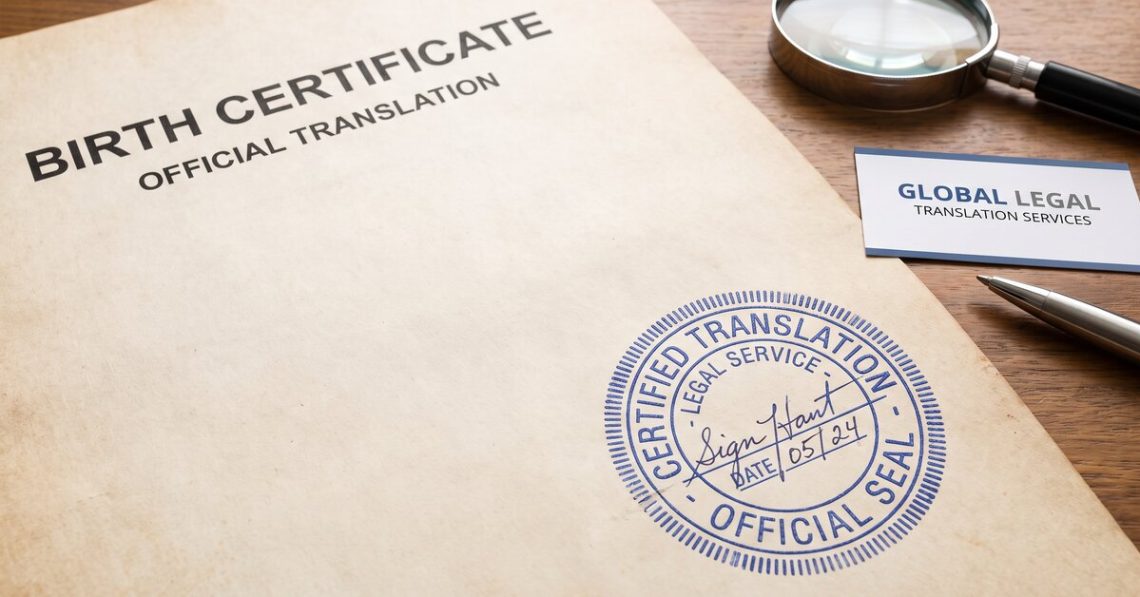
These terms are frequently confused. A certified translation includes a signed statement from the translator attesting that the translation is accurate and complete to the best of their knowledge. Notarized translation adds a notary public’s acknowledgment of the translator’s signature — it does not attest to translation accuracy. USCIS and most immigration authorities accept certified translations; some specific legal proceedings may require notarized translations. Always verify the specific requirement for your use case.
USCIS Requirements for Birth Certificate Translation
USCIS requirements are among the most frequently referenced: translations must be certified, include the translator’s full name and address, include a statement that the translator is competent to translate the specific language pair, and be accompanied by the original document (or a certified copy). USCIS does not require translators to be certified by a specific organization — anyone competent in both languages can certify their own translation.
How the Birth Certificate Translation Process Works
| Step | Action | Typical Timeframe |
|---|---|---|
| 1 | Obtain official birth certificate (original or certified copy) | 1–7 days |
| 2 | Scan or photograph document clearly | Same day |
| 3 | Submit to certified translator or translation service | Same day |
| 4 | Translation and certification completed | 1–3 business days |
| 5 | Review translation for accuracy | Same day |
| 6 | Submit with application | As required |
How to Find a Qualified Birth Certificate Translator
Professional Translation Services
Established translation services with experience in official document translation are the most reliable option. Look for: demonstrated experience with immigration documents, clear certification process, same-day or next-day availability, transparent pricing per page, and willingness to revise if a government authority requests it (some services offer this guarantee).
American Translators Association (ATA) Members
While USCIS doesn’t require ATA certification, ATA-credentialed translators in the relevant language pair provide additional quality assurance. The ATA directory is searchable by language pair and specialty. For high-stakes immigration cases, ATA-certified translators are worth the typically higher per-page rates.
Typical Costs for Birth Certificate Translation
Certified birth certificate translation typically costs $50–$150 per page for professional services. Rates vary by language pair (less common languages cost more), service speed (rush services typically carry a 50–100% surcharge), and the complexity of the document (documents with specialized terminology, stamps, and handwritten elements take more time). Avoid services offering translation for $10–$20 per document — quality and reliability at that price point are generally poor.
Common Mistakes to Avoid
The most common pitfalls: using machine translation (not accepted for official purposes), obtaining translation before ensuring the original is current and official (some authorities require recently issued copies), not verifying the specific certification requirements of your use case, and failing to have the translation reviewed before submission. A rejected translation means restarting the process.
FAQ
Can I translate my own birth certificate?
Technically, USCIS allows anyone competent in both languages to certify a translation. However, self-translation of your own documents is generally not accepted because you’re not considered impartial. Immigration officers may reject self-translations. Use an independent qualified translator.
How long does birth certificate translation take?
Standard service: 1–3 business days. Rush service (24-hour or same-day): available from most professional services at additional cost. For urgent immigration deadlines, always use rush service and confirm turnaround time before ordering.
Does the translation need to match the original format exactly?
USCIS requires translations to be accurate and complete — but doesn’t require exact formatting replication. All text, including stamps, handwritten notes, and official seal text, must be translated and noted. The translation should clearly correspond to the original document layout for easy comparison.
What if my birth certificate is handwritten or difficult to read?
Professional translators can handle handwritten documents, though illegible sections should be noted as such in the translation. Provide the clearest possible scan or photograph. If sections are truly illegible, note this explicitly — submitting a translation that omits text without noting illegibility can cause issues.
Is a Google Translate printout acceptable for official use?
No. Machine translation output without a certified translator’s attestation is not accepted for immigration, legal, or official governmental purposes. Certified translations require a human translator’s competency attestation.
What languages require specialized translators?
Languages with non-Latin scripts (Arabic, Chinese, Russian, Thai, etc.) require translators specifically trained in those writing systems. Rare language pairs may have limited certified translator availability, which can extend timelines and increase costs. Plan accordingly if your document is in a less common language.
Conclusion
Translating a birth certificate for official use requires accuracy, proper certification, and attention to the specific requirements of your application authority. Using a qualified professional translation service is worth the investment — the cost of a rejected application due to inadequate translation far exceeds the cost of getting it right the first time. Follow the steps in this guide, verify requirements specific to your use case, and allow sufficient time in your application timeline for the translation process.