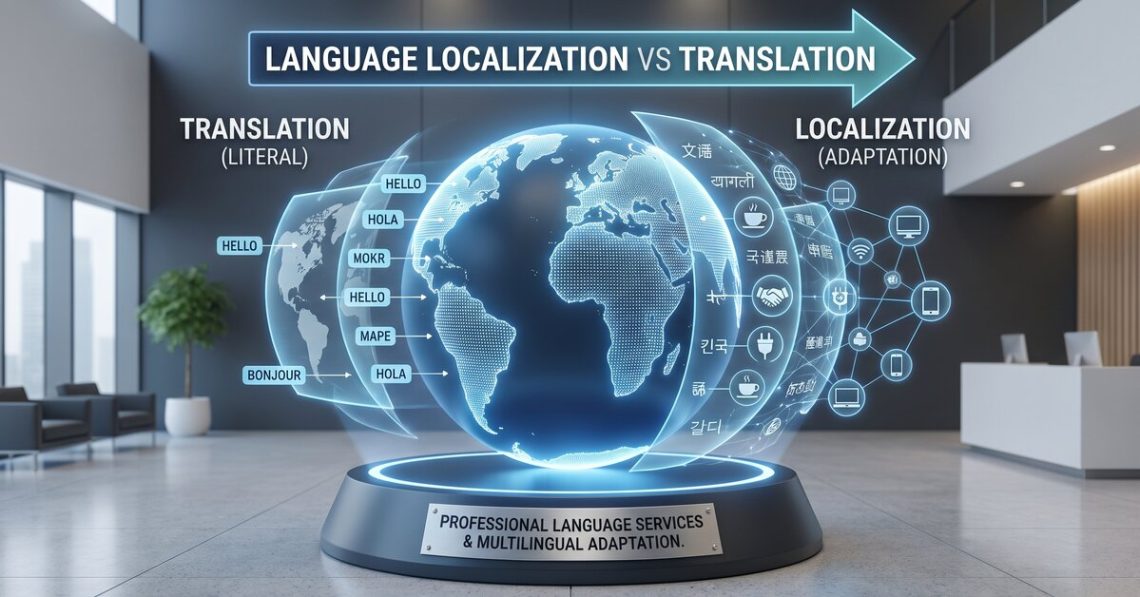
The terms translation and localization are frequently used interchangeably — but they represent meaningfully different processes with different scopes, costs, and outcomes. Choosing the wrong approach for your content can result in material that is technically accurate but culturally off-putting, legally non-compliant in target markets, or simply ineffective at achieving its business goal. Understanding the distinction is foundational to any successful global content strategy.
What Is Translation?
Translation is the process of converting text from one language (source) to another (target) while preserving meaning. Good translation maintains the intent, tone, and style of the original as accurately as possible. Translation is a subset of localization — but localization is not simply translation.
Types of Translation
Within translation, there are important sub-categories: literal translation (word-for-word, rarely used in professional contexts), dynamic equivalence translation (conveying meaning rather than matching words), transcreation (adapting creative content for emotional impact), and specialized translation (legal, medical, technical) requiring domain expertise.
What Is Localization?
Localization (often abbreviated L10N) is the comprehensive adaptation of content, products, or services for a specific target locale — a combination of language and cultural context. Localization includes translation but extends to: cultural references, idioms, and humor; date, time, and number formats; currency display; images and visual design; legal and regulatory compliance for the target market; user interface elements; and marketing messaging.
A Concrete Example
A US-based SaaS company expanding to Germany needs to: translate the interface into German (translation); adapt the pricing page to display euros with German number formatting (localization); ensure the privacy policy complies with GDPR and is written under German legal conventions (localization + legal); replace photography showing American business contexts with European alternatives (localization); and localize the marketing tone from typically direct American style to the more formal register expected in German B2B contexts (transcreation/localization).
Translation vs. Localization: Key Differences
| Dimension | Translation | Localization |
|---|---|---|
| Scope | Text only | Text + design + culture + legal |
| Goal | Linguistic accuracy | Cultural appropriateness + effectiveness |
| Cost | Lower | Higher |
| Team required | Translator | Translator + cultural consultant + designer + legal |
| Time | Shorter | Longer |
| Best for | Documents, reports, correspondence | Products, marketing, websites, apps |
When Translation Is the Right Choice
Translation without full localization is appropriate when: the content is informational rather than persuasive (technical manuals, reports, legal contracts), the cultural context of the target audience is similar to the source, the content is internal rather than customer-facing, or the budget doesn’t support full localization and basic comprehension is the primary goal.
When Localization Is Essential
Full localization is essential for: consumer-facing products and apps, marketing and advertising campaigns, e-commerce experiences, customer support content, and any content where cultural resonance and trust are critical to effectiveness. A website that is accurately translated but culturally foreign will convert significantly worse than a properly localized one.
The Cost of Inadequate Localization
Brand failures from poor localization are well-documented. Chevrolet’s Nova in Spanish-speaking markets (“Nova” sounds like “no va” — doesn’t go), KFC’s “finger-lickin’ good” translated literally in China, and Pepsi’s “come alive” campaign mistranslated in Germany are classic examples. In modern digital contexts, poor localization manifests as confusing UX, culturally inappropriate imagery, and marketing that fails to convert in target markets.
Internationalization: The Foundation of Good Localization
Internationalization (I18N) is the technical process of designing software and content to support multiple locales without major rework. Organizations that invest in proper I18N before localization dramatically reduce the cost and complexity of each localization effort. For software products, I18N includes: externalized string resources (text not hardcoded), Unicode support, flexible UI layouts for different text lengths, and locale-aware date and number formatting.
Building a Localization Strategy
A practical localization strategy starts with market prioritization: which markets matter most to your business? Then content prioritization: which content most needs localization vs. translation for those markets? Then partner selection: professional translation agencies, in-country reviewers, localization platforms (like Lokalise, Phrase, or Crowdin for tech products). Continuous localization — integrating localization into your development and content pipelines — is the maturity model that leading global companies have adopted.
FAQ
Is machine translation sufficient for localization?
Machine translation can be used as a productivity tool for translators (a technique called Machine Translation Post-Editing, MTPE) but is not suitable as a standalone localization solution for customer-facing content. The cultural adaptation components of localization specifically require human expertise.
What’s the difference between localization and transcreation?
Transcreation is a subset of localization specifically for creative content — adapting marketing copy, taglines, and brand messaging for emotional impact in the target culture, even if the literal wording diverges significantly from the source. Transcreation is the most creative and expensive part of the localization process.
How do I know if I need translation or localization?
Ask: Is this content trying to persuade, engage, or build trust — or just inform? If informing, translation may suffice. If persuading, engaging, or building trust with a new cultural audience, localization is necessary.
How much does localization cost compared to translation?
Full localization typically costs 3–5x more than translation alone, due to the additional work of cultural adaptation, design updates, legal review, and quality assurance. The ROI on proper localization for customer-facing products is generally very strong when entering high-value markets.
Can I do localization in-house?
In-house localization is possible if you have bilingual team members with both linguistic and cultural competence in the target market — and the time to do it properly. For most businesses, professional localization services or a hybrid model (professional translation + in-country employee review) delivers better quality at manageable cost.
What are the most important elements to localize for an e-commerce site?
In order of impact: payment methods (must support local preferences), pricing and currency display, customer support language, product descriptions and naming, legal terms and privacy policy, checkout flow language, and product imagery and models.
Conclusion
Translation and localization serve different purposes and match different business needs. Translation delivers linguistic accuracy; localization delivers cultural effectiveness. For internal documents and informational content, translation is often sufficient. For customer-facing products, marketing, and digital experiences in new markets, proper localization is not optional — it’s the difference between a product that works in a new market and one that doesn’t. Know which you need, budget accordingly, and invest in the right level of adaptation for the stakes involved.